
HHGW

Research Forum 2026

HHGW-26

〰️

HHGW-26 〰️

7th - 9th July 2026

Our Partners

Following the success of the HHGW-24 Research Forum… this conference aims to bring together students, academics and industry experts from across the UK with leading international experts to share their research and develop new collaborations.

Understanding the long-term evolution and performance of High Heat Generating Wastes (HHGW) in disposal conditions is a key consideration in the delivery of the UK’s Geological Disposal Facility (GDF).

This year’s workshop is the third in this pursuit and builds on the success of the first meeting held at the University of Huddersfield in 2022. The second meeting has expanded to be co-organised by the University of Cambridge and the University of Huddersfield. It is being financially supported by Nuclear Waste Services, EPSRC and organising universities.
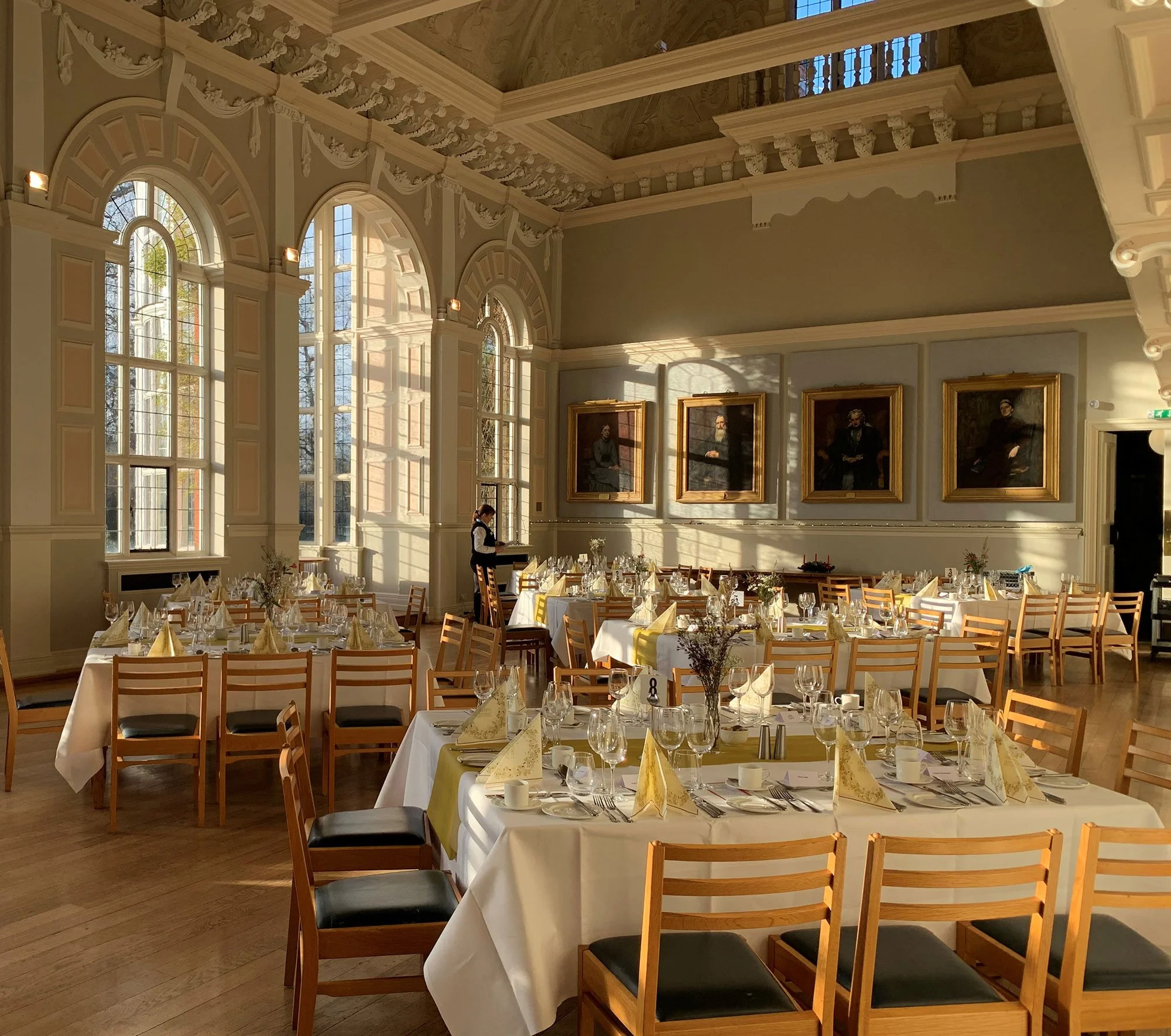
Newnham College Hall

Venue

Newnham College, University of Cambridge
Sidgwick Avenue, Cambridge, CB3 9DF, UK
Telephone: +44 (0)1223 335700

The conference is taking place at the heart of this historic college, known for its stunning architecture and our grounds are often called the ‘Secret Gardens’ of Cambridge.

View interactive map of college and area
Download maps of college, location and parking

Accommodation

Selwyn College, University of Cambridge
Grange Road, Cambridge, CB3 9DQ
Telephone: +44 (0)1223 335846

A good night’s sleep will help you to engage fully with the conference – especially when followed by a hearty English breakfast in our traditional oak-panelled Dining Hall. Selwyn College is located just to the west of, and about ten minutes’ walk away from, the city centre.

Read or download pre-arrival information
View interactive map of college and area

Schedule

List of abstracts (oral)

  • Aqueous Leaching of Very High Burnup UO₂ Spent Nuclear Fuel Under Hydrogen Pressure.

    Read more…

  • Application of Mössbauer spectroscopy to the solution of radioactive waste vitrification challenges 

    Read more…

  • Disposition of separated plutonium: current and historical perspectives 

    Read more…

  • Purpose and capabilities of the ThermoChimie database, a recent history of key developments, and some examples of benchmarking 

  • The Corrosion of UO2-based Spent Nuclear Fuel under Storage and Disposal Conditions: A comparison of real irradiated fuel and SIMFUEL Studies 

    Read more…

  • Evaluating Disposal of Plutonium Wasteforms 

    Read more…

  • What Can You Do with a PhD in the Nuclear Industry? 

    Read more…

  • Towards the Disposability of the UK’s Plutonium Inventory 

    Read more…

  • Developing opportunities for vitrification of complex radioactive wastes from the Sellafield site 

    Read more…

  • The ILW Thermal Treatment Landscape at Sellafield Ltd. 2026 

    Read more…

  • Ceramic Wasteform and Process Development for Pu Disposition

    Read more… 

  • Boron isotope diffusion during glass-fluid interactions: Effects of glass composition and solution renewal

    Read more…

  • Plutonium Science at Sellafield Limited 

    Read more…

  • Simulating Water Radiolysis with H2O2 in Leaching Tests of Candidate Pu Wasteforms 

    Read more…

  • Magnesium and the chemical durability of UK HLW glasses 

    Read more…

  • Challenges for the Treatment of High Heat Generating Waste (HHGW) at Sellafield 

    Read more…

  • Plutonium Immobilisation Research at Manchester: DMOX Wasteforms and Novel Sintering Technologies 

    Read more…

  • Mechanistic aspects of radiation-induced dissolution of UO2-based used nuclear fuel 

    Read more…

  • Atomistic insights into the interactions of small molecules with PuO2 surfaces 

    Read more…

  • Operando Observation of Dissolution Kinetics and Alterations Layer Formation of Heavy Ion Irradiated Borosilicate Glass by Fluid-cell Raman Spectroscopy 

    Read more…

  • From Knowledge Gaps to Disposal Confidence: A Multidisciplinary Approach to Actinide Waste Disposal.

    Read more…

  • NWS R&D for UK GDF 

  • Studies on Waste Management and Disposal: Applications to Fukushima (1F) Decommissioning and Nuclear Fuel Cycle Systems 

    Read more…

  • Safety and Security cases for GDF - Overview and case study for criticality safety

    Read more…

  • Influence of helium ions irradiation on leaching behaviours of borosilicate glasses

    Read more…

  • Toward an integrative Approach of Nuclear Glass alteration in a Reactive environment from MultiscAle Modelling

    Read more…

  • The use of isotopic tracing to study the formation of the alteration layer on corroded glass

    Read more…

  • Electrochemical Corrosion Rate Studies of MOX SIMFuels

    Read more…

  • Disposal MOX – A Combined Study of its Fabrication and Disposability

    Read more…

  • Time-of-Flight Elastic Recoil Detection Analysis for Simulated Radiation Induced Diffusion Effects on Nuclear Waste Glasses

    Read more…

  • Lessons from nature; insights into long-term vitrified waste corrosion mechanisms from natural analogue systems

    Read more…

  • Impact of α-damage and radiogenic helium formation on the properties of actinide based oxides: implications for their use, waste storage and disposal.

     Read more…

  • Coupling Effects of Irradiation and Corrosion on Borosilicate Glass and Prospects for Laboratory Simulation Methods

    Read more…


List of abstracts (poster)

  • Influence of Processing Route (HIP vs CPS) on the Properties of Titanate Wasteforms

    Read more…

  • Analysis of Vitrified Simulant Plutonium Contaminated Material from Industrial Trials

    Read more…

  • Criticality Safety: Investigating the co-mobility of actinides and neutron absorbers in radioactive waste disposal

    Read more…

  • High Level Waste Nepheline Precipitation Boundary: Investigating Worst and Best Case Scenarios

    Read more….

  • Disposal MOX for the immobilisation of the UK’s plutonium inventory

    Read more…

  • Effect of MOx Composition and Homogeneity on Disposal Performance

    Read more…

  • Effect of Temperature and pH on the Corrosion of Ceramics and the Role of Secondary Phases and Grain Boundaries

    Read more…

  • Probing Radiation Damage Mechanisms in Zirconolite Systems

    Read more…

  • Investigating the Use of Thorium Within Disposal-MOX (DMOX) for Corrosion Inhibition

    Read more…

  • Spent Fuel Leaching in Challenging Groundwaters: Development & Validation of a Fast Throughput, Corrosion-based Dissolution Rate Measurement Methodology 

    Read more…

  • The Synthesis and Aqueous Durability of Ce.Gd doped and non-doped Zirconolite

    Read more…

  • Assessment of D-MOX Manufacturing Parameters on Product Microstructure

    Read more…

  • Disposability Assessments of Multiphase Synroc Ceramics for the Thermal Treatment of UK Radioactive Wastes

    Read more…

  • Novel Characterisation of Disposal Materials for High Level Waste Using Time-of-Flight Elastic Recoil Detection Analysis

    Read more…

  • Ni retention during devitrification of high-level radioactive waste glasses

    Read more…

  • Exploring the development and corrosion behaviour of Se-doped SIMFUELs 

    Read more…

  • Precursor and Phase Development of Zirconolite Wasteforms 

    Read more…

  • Underpinning Laboratory-Based High-Level Waste Glass Dissolution Tests 

    Read more…


Advisory Panel and Organising Committee

Yingjie Zhang - ANSTO Australia. Mats Jonsson - KTH Sweden. Sylvain Peuget - CEA Marcoule France. Mara Iris Lonartz - University of Bonn, Germany. Clare Thorpe - University of Sheffield. Ian Farnan - University of Cambridge. Mir Anamul Haq - University of Cambridge. Paul Heath - NWS

Travelling to Cambridge

  • By air

    Stansted is the nearest international airport. There are regular coach services from Cambridge to all London airports, and train services from Stansted to Cambridge.

    Please be aware that EU citizens travelling to the UK need to obtain an Electronic Travel Authorisation: 
    https://www.gov.uk/guidance/apply-for-an-electronic-travel-authorisation-eta

  • By car

    When travelling to Cambridge by car, consider the following tips:

    Plan Your Route: Use a route planner like the AA's Route Planner for directions and traffic updates.

    theaa.com

    Parking Options: There are multi-storey and pay-and-display car parks within walking distance of the city centre. The Grand Arcade has a centrally located multi-storey car park.

    cambridge.gov.uk

    E-Car Charging: If you have an electric vehicle, there are e-car charging points available in the city.

    visitcambridge.org

    Public Transport Alternatives: Consider using the guided busway to avoid congestion when entering or leaving the city.

    visitcambridge.org

    These tips will help ensure a smooth journey to Cambridge.

    Please be aware that, from April, EU citizens travelling to the UK need to obtain an Electronic Travel Authorisation:
    https://www.gov.uk/guidance/apply-for-an-electronic-travel-authorisation-eta

  • By rail

    There are frequent train services from London (King’s Cross, 49 mins, and Liverpool Street) and from the North and Midlands. There is a taxi rank at the station.

    Please be aware that, from April, EU citizens travelling to the UK need to obtain an Electronic Travel Authorisation:
    https://www.gov.uk/guidance/apply-for-an-electronic-travel-authorisation-eta

Risk assessments

The risk assessments provided here are for the venues hosting the conference and overnight accommodation, namely Newnham College and Selwyn College. They cover all elements of the event, other than times where delegates are not on these premises. All free time, including travelling to and from venues, is at the risk of the individual.

HHGW Risk Assessment
RMP 1 - Health and Safety Policy
RMP 5 - First Aid Policy
RMP 11 - Fire and Emergency Procedures
RMP 26 - Slips, Trips and Falls


For emergencies at any stage during the event, please contact:

Event Coordinator, Claire Armstrong on +44 7875 008510

Porters Lodge, Newnham College on +44 1223 335700

Porters Lodge, Selwyn College on +44 1223 335846

We look forward to seeing you soon…